

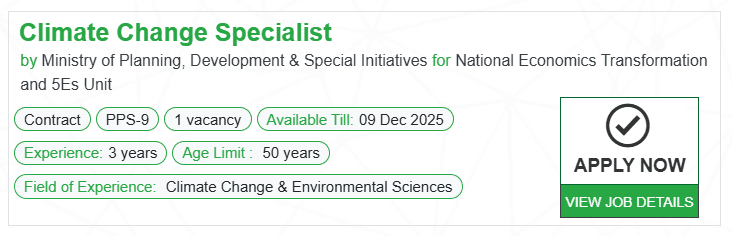
کیا آپ ایک ایسے پیشے میں قدم رکھنا چاہتے ہیں جہاں آپ کی مہارت زمین کے سب سے اہم مسئلے سے براہ راست نمٹے؟ “کلائمٹ چینج اسپشلسٹ” بننا صرف ایک نوکری نہیں، بلکہ مستقبل کی تشکیل میں ایک اہم کردار ادا کرنا ہے۔ یہ وہ مقام ہے جہاں سائنس، پالیسی اور عملی اقدام کا سنگم ہوتا ہے، اور آپ کا کام لاکھوں افراد کے تحفظ اور پائیدار ترقی کا راستہ ہموار کرتا ہے۔ پاکستان جیسے موسمیاتی تبدیلیوں سے بری طرح متاثرہ ممالک میں تو یہ کردار اور بھی اہم ہو جاتا ہے، جہاں زراعت، پانی اور توانائی کے شعبے براہ راست اس عالمی چیلنج سے متاثر ہو رہے ہیں۔
ایک ماہر کے طور پر، آپ قومی ترجیحات، جیسے کہ “قومی معاشی تبدیلی اور 5 ایز منصوبہ” کا حصہ بن کر ایسے حل تیار کریں گے جو نہ صرف موجودہ مسائل سے نمٹیں بلے آنے والی نسلوں کے لیے ایک محفوظ ماحول کو یقینی بنائیں۔ آپ کا کام ڈیٹا کی پیچیدہ دنیا سے لے کر دیہات اور شہروں کی سطح پر ہونے والی عملی تبدیلیوں تک پھیلا ہوگا۔ یہ موقع ہے کہ آپ اپنے علم کو ایک ایسی تحریک میں بدلیں جو ملک کے لیے حقیقی اور دیرپا فرق پیدا کر سکے۔
اس میدان میں داخلے کے لیے دو واضح راستے ہیں، جو آپ کے تعلیمی سفر کو مدنظر رکھتے ہوئے طے کیے گئے ہیں۔ مندرجہ ذیل جدول میں ان دونوں قسطوں کی ضروریات یکجا طور پر پیش کی گئی ہیں تاکہ آپ اپنی صلاحیتوں کے مطابق بہترین راستہ منتخب کر سکیں:
| شرائط و ضوابط | تفصیل |
|---|---|
| پی ایچ ڈی والا راستہ | ماحولیاتی سائنس یا موسمیاتیات میں پی ایچ ڈی کے ساتھ تین سال کا پیشہ ورانہ تجربہ، خاص طور پر غذائی تحفظ یا پائیدار کاشتکاری کے شعبے میں، جس میں منصوبوں کی ترقی اور نفاذ کا ثبوت شامل ہو۔ |
| ماسٹرز والا راستہ | مذکورہ شعبوں میں ماسٹرز ڈگری کے ساتھ سات سال کا پیشہ ورانہ تجربہ، جس کا تعلق پانی کے تحفظ، آبی وسائل کے انتظام، یا سول انجینئرنگ جیسے وسیع تر شعبوں سے ہو سکتا ہے۔ |
| کلیدی صلاحیتیں (دونوں راستوں کے لیے مشترکہ) | موسمیاتی تبدیلی کی سائنس اور بین الاقوامی معاہدوں کی گہری سمجھ، مضبوط تجزیاتی اور مواصلاتی مہارت، اور حکومتی پالیسیوں کے عمل کی واضع علم۔ |
Become a Climate Change Specialist: Guide to Qualifications, Skills & Career Path
Climate Change Specialists: Why We Need Them
Climate change specialists are experts who create and put into effect plans to lessen the negative impact of climate change and adapt to the changes that are happening. These specialists work where science, government actions, and community work meet. They turn hard-to-understand data into plans that governments, charities, and companies can use. Their work is very important in creating a future that can be maintained, making this job very important and wanted in many fields.
The specialist is a key connector between what science tells us and how we use that information. They make sure policies and projects are based on solid facts. For example, in projects like Pakistan’s National Economic Transformation and 5Es Project, they must add climate change proofing into important economic planning. Their work helps inform choices that impact farming, water access, city growth, and energy. The goal is to protect communities that are at risk and lead the country to grow in a way that can be maintained.
Comprehensive Educational and Experience Pathways
To get into this field, you need both a solid education and some hands-on experience. There are mainly two paths you can take, depending on your degree.
**PhD Path:** You’ll need a PhD in Environmental Science, Climate Science, or something similar from a good school, plus at least three years of work experience. This experience should be in areas like food security or sustainable farming, and you need to show that you can develop and run programs. This route is good if you want to bring strong, research-based knowledge.
**Master’s Path:** If you have a Master’s degree in one of those fields, you’ll need more experience—at least seven years. The type of experience can also be broader here, like in water security, water resource management, hydrology, or civil engineering. This is because dealing with climate change requires various technical skills.
Both paths make sure that people not only know the theory but also have the practical skills to deal with real-world climate problems and lead projects that work.
Essential Core Competencies and Skills for Success
To do well in this job, you need more than just a degree. You need skills working with people. These skills assist specialists to look closely at tough problems, plan well, and get everyone to work together.
You should know a lot about climate change science, like all the newest facts and predictions. It’s also key to know things such as the Paris Agreement and what the government is doing, so you can make plans that follow the rules and make a difference.
You have to be good at taking a close look at how climate change affects different parts of our lives. Even more vital, you need to explain the issue clearly. You’ll be talking to all sorts of people, such as government workers and local leaders, so they agree and help fix the problems.
It’s important to know how to make, start, and judge a program. You also need to get along with others, like government groups, charities, and world organizations.
A Day in the Life: Key Duties and Responsibilities
A Climate Change Specialist’s day-to-day work is all about taking strategies and making them real. They’re involved in every step, from the first look at a project to keeping an eye on how it works in the long run.
Doing Impact Research
One of their main jobs is to study how climate change affects important areas like water, farming, and cities. This means looking at climate info, models, and patterns to find weak spots and help with planning. What they learn becomes the basis for future actions.
Making Policy and Building Strength
Specialists help create climate change policies and plans that fit with what the country and the world are trying to do. A big part of their job is finding ways to add climate resilience to current policies and projects, so sustainability is always considered.
Running Projects and Encouraging Teamwork
They create and manage projects that lessen climate change and help communities stand strong. Watching and judging these projects is important to see how well they work. Specialists also encourage teamwork between government groups, charities, and companies by holding meetings and talks to create a single plan for climate action.
Career Pathways and Growing Job Market
The climate job market is growing fast across the world. You can find jobs in government, groups like the UN, consulting, charities, and private companies. Many job sites list open positions, from policy advisors to carbon analysts, and even roles in communications and project leadership.
A Variety of Jobs: There are many specific jobs you can do. For example, you might be a technical advisor on change, a water policy expert, or someone who creates carbon projects. Programs such as the Climatebase Fellowship can help you get started or move up in this field.
Good Pay and Perks: The pay is good because these jobs require special skills. Senior experts at international groups can earn a lot. Top companies also offer good benefits, like help with work-life balance, training, and health coverage. They know it’s important to keep talented people in these challenging jobs.
How to Prepare and Launch Your Career
Want a career as a Climate Change Specialist? You need a plan and get involved. Internships are a great start for students and those just beginning their careers. Lots of places, from companies like NBCUniversal and Nike to state programs like MassCEC Clean Energy Internship, provide chances to get real-world experience.
Ready for a job? Use resources that focus on this field. Climatebase, Climate Internships, and The Impact Job are good for finding job openings. Networking and showing off your skills are also helpful. Join professional groups, work on projects, and make sure your resume shows off your experience with program planning and working with others. These things all help you stand out in this competitive and important field.
